English
  日本語
日本語  français
  Deutsch
  Español
  italiano
  русский
  português
  العربية
  magyar
  Ελλάδα
inquiry@ljzcncmachining.com

From aerospace to HVAC, impellers are the workhorses of fluid dynamics - converting rotational energy into pressure and flow. This blog discusses various aspects of impeller manufacturing, answers your questions about the difference between an impeller and a propeller, and discusses advanced design approaches in search of the mother of all efficiencies.
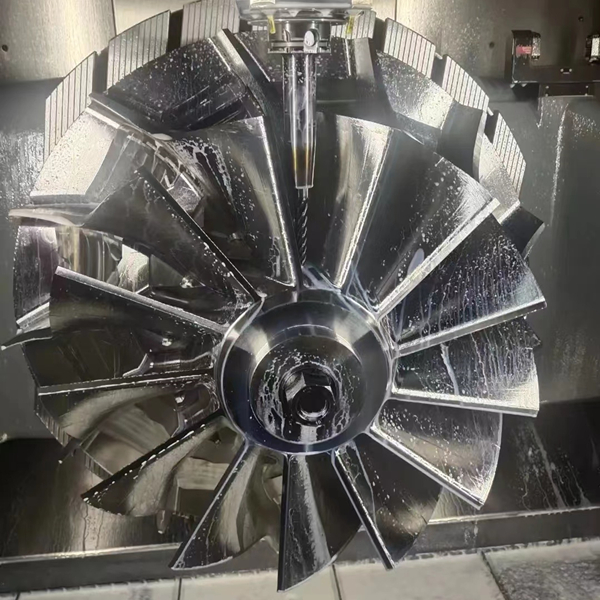
Impeller manufacturing takes a mix of advanced engineering drawings and precision machining. Here is a snapshot view of the process:
Modern impeller manufacturing starts with computational fluid dynamics (CFD) simulations to define the blade geometry, pressure ratios, and flow paths. Other aspects, such as inlet/exit angles and bias angle, may be set in advance and optimized using response surface methodology (RSM) based on efficiency and torque.
Common materials for impellers include alloy aluminum, stainless steels, and engineering resins with superior mechanical performance. In the case of centrifugal compressors for fuel cell vehicles, lightweight and durable alloys are preferred due to energy loss concerns.
The preform is usually manufactured through a casting process (often a fine casting process) to create a near-net shape. As an added measure of assurance, manufacturing process parameters require forging to critical sections to improve structural integrity. In the case of resin-based impellers (ex., centrifugal blowers), more often than not, laser welding is used to attach the hollow blades to a rotator hub while under axial compression.
Complex blade profiles with micron tolerances are processed on multi-axis CNC machines. LJZ CNC is a 5-axis machining service to provide smooth machined surfaces on the impellers used to reduce turbulence.
After machining is complete, the received parts may undergo balancing, polishing, and coatings like nickel plating. The impeller's operational Performance can be verified by performing hydrodynamic testing in a lab setting.
Although both an impeller and a propeller have rotating blades, they are different in their application functions and designs:
An impeller is meant to move fluids through an assembly (ex., pumps and compressors) by causing the fluid to accelerate either radially (outwards from the center) or axially (away from the direction of the blade's rotation) . A propeller is designed to create thrust to move a vehicle (ship, drone) through a fluid (air or water).
Impellers usually have blades that are enclosed to create a directed flow of the fluid. Propellers typically have open blades designed for maximum thrust due to decreased drag when moving through a fluid.
Propellers build thrust for a few different reasons than an impeller would achieve its pressure rise for an application. Propellers would look at the thrust-to-power ratio for efficiency. An impeller can potentially deliver the fluid at a required pressure based on the design, which is essential for the stability of flow and flow performance over time.
Impellers: turbochargers, fuel cell compressors, industrial pumps.
Propellers: outboard motors for vessels, aircraft, and wind turbines for the generation of power.
An efficient design of the blade component comes down to compromising on aerodynamic performance, resilient material performance, and the ability to manufacture the blades:
The exit angles and bias angles can be crucial to the torque ratios and how efficient it is at peak performance. Larger angles of the exit would maximize the transfer energy efficiency, which is especially important to an automotive torque converter. In the same sense, /the blade design has been created behind the scenes using CFD, which helps prevent turbulence or cavitation potential or risk.
Thin-walled, resilient, high-strength alloy materials will create an optimum impeller blade design due to minimized weight and minimized material resistance to pressure. With the emerging use of additive manufacturing, one could use new designs that accelerate the use of unique geometry to
pique the interest of owners.
When the impeller is polished, it reduces friction losses. Coatings are available, and DLC (diamond-like carbon), for example, is further resistant to
wear and corrosion.
The impeller that is most ideal is going to be the most efficient across loads. For example, it is easy to optimize the design of a centrifugal compressor impeller to have flat performance characteristics or a flat performance curve across operational variations in load.
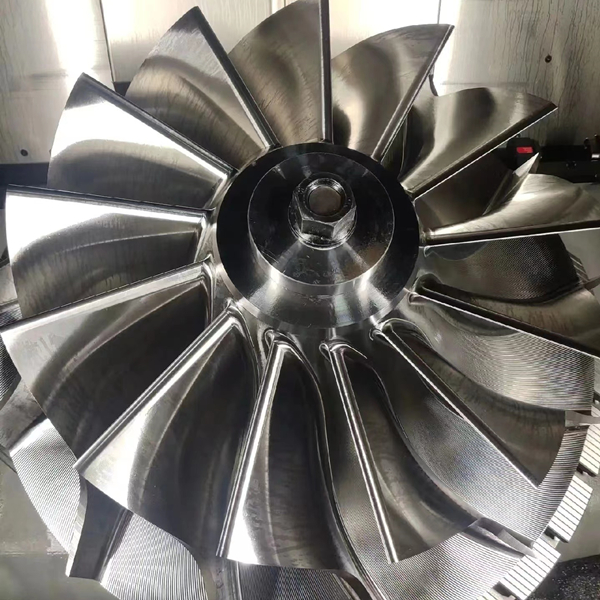
Whether it is a fuel cell compressor, an automotive torque converter, or thrust propulsion in a vessel (marine), impellers usually constitute the ideal design.
LJZ CNC Machining can offer our customers:
5-axis precision machining for time-sensitive work to complete more complex blade geometry work for the aerospace or energy industry.
One Stop Shop for end-to-end work- from CFD to post processing.
Machining experience with common material types such as stainless steels, titanium, and engineered polymers.
We have over a decade of experience servicing many Fortune 500 customers.
We have ISO certified quality testing.
To ensure that what you get meets the engineering specifications as they apply to ASME/API did, we will conduct thorough testing.
We can support rapid prototyping measures to expedite R&D cycles with our advanced CNC and EDM capabilities.
Are you ready to optimize your impeller performance? - Contact LJZ CNC Machining for a free consultation on the design.
 日本語
日本語